IOS & ANDROID APP
FlippingBook Mobile Sales Companion
COMPANY
FlippingBook
ROLE
Lead Product Designer
TEAM
PM, Dev, QA
TIMEFRAME
2024
Project Description
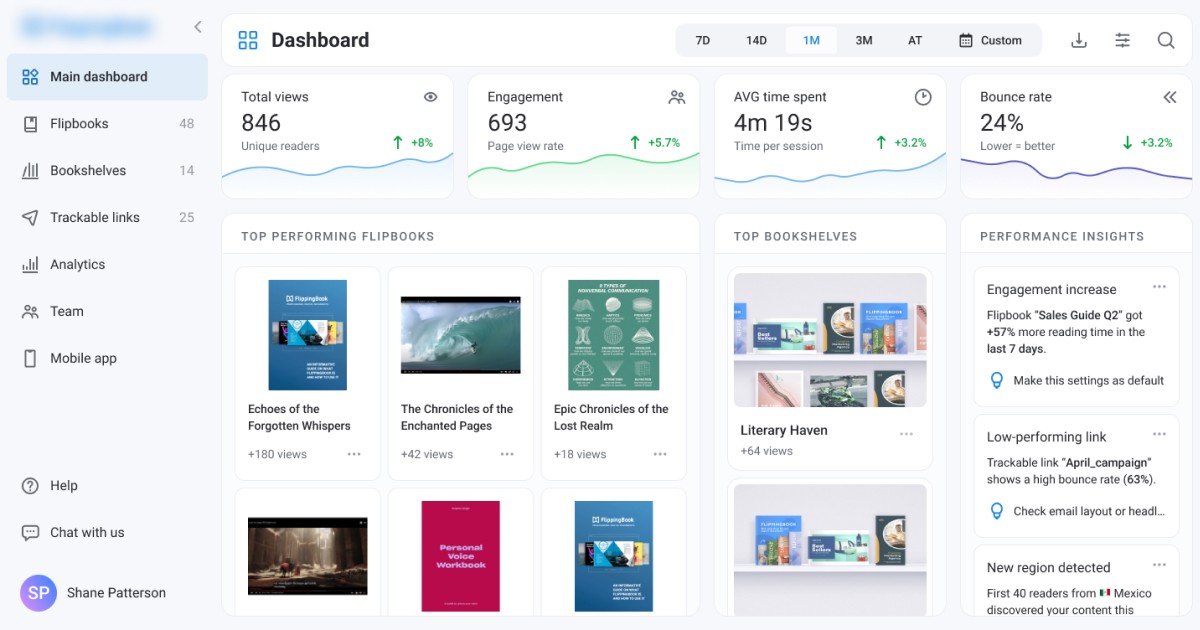
Designed the first native mobile app for FlippingBook, enabling sales teams to access marketing collateral offline and share trackable links on the go. The app bridged the gap between the desktop platform and field operations, becoming an essential tool for trade shows and face-to-face meetings.
Background
Sales representatives often work in environments with poor connectivity (trade shows, client offices) and need instant access to brochures and catalogs. The web version wasn't enough. The goal was to build a native "pocket library" that synced with the main account but focused purely on consumption and distribution, not creation.
Timeline:
6 months to launch.
Process
The challenge was to adapt a complex B2B product for a 5-inch screen. I led the end-to-end design process, focusing on "field" ergonomics and offline reliability.
Scenario Mapping
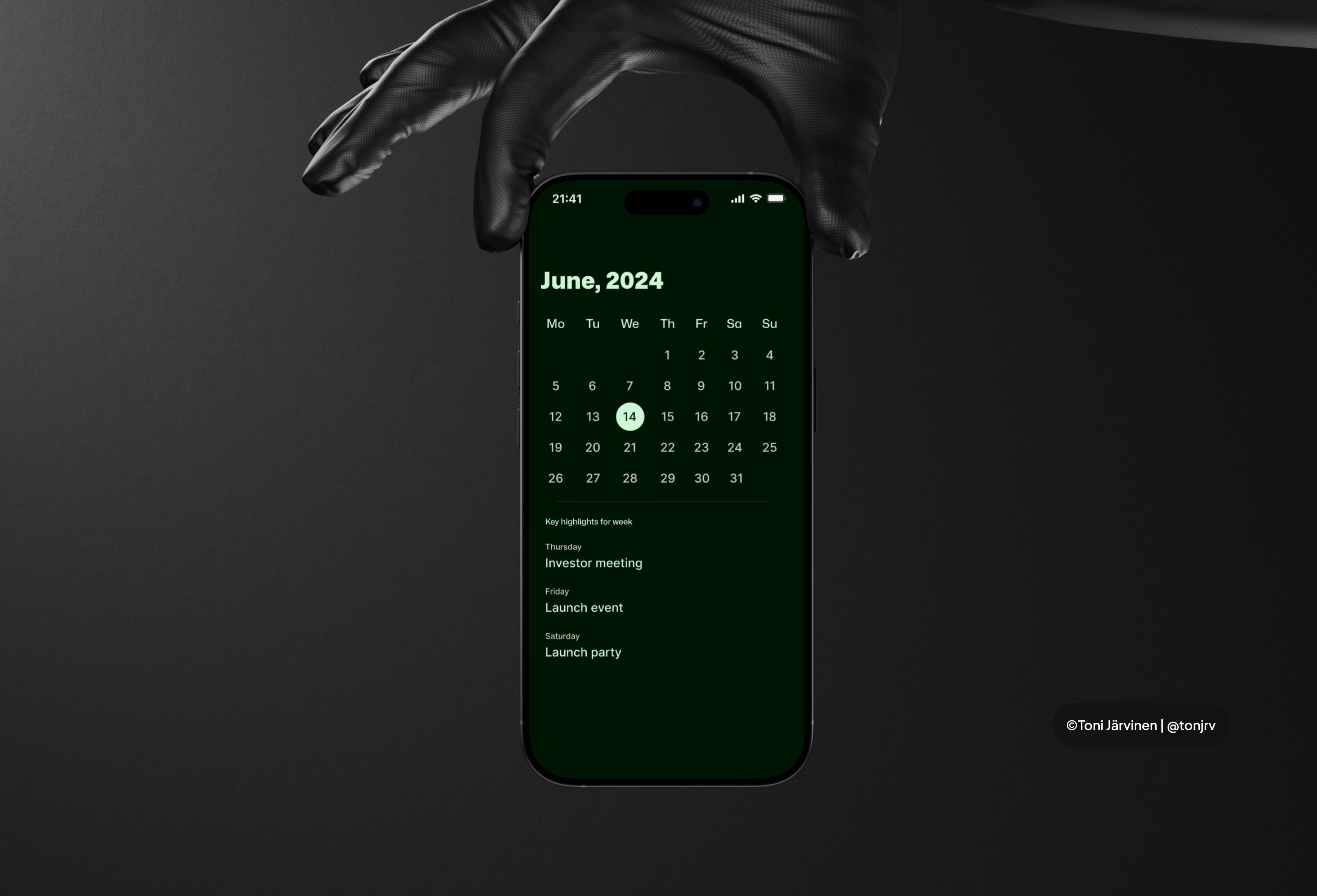
I didn't just port desktop features. I conducted user interviews to map the "Sales Rep Journey." We discovered that speed was critical—users needed to find a specific brochure within 15 seconds while talking to a client. This led to the "Recent & Favorites" first navigation model.
Handling Heavy Data
One of the biggest technical constraints was rendering heavy PDFs (100MB+) smoothly. I worked closely with iOS devs to design progressive loading states and "skeleton" placeholders that kept the UI responsive even on bad 3G networks.
Native Adaptation
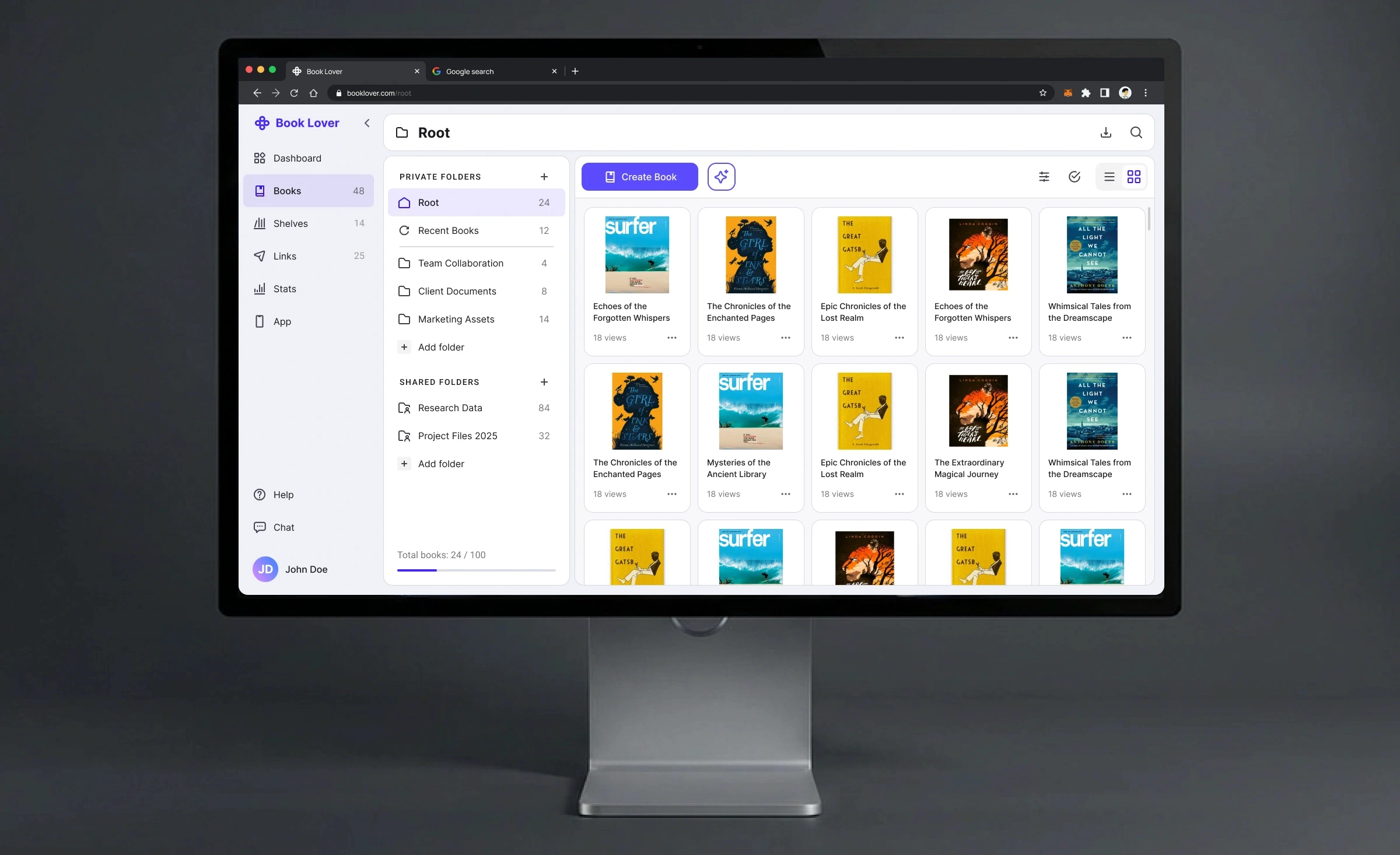
I established a strict framework for adapting desktop UI patterns to mobile. For example, complex data tables from the web were transformed into "Card Views" on mobile to improve readability, leveraging iOS-native navigation stacks for deep diving into analytics.
Solution
A focused toolset designed for the "disconnected" professional, solving the anxiety of presenting without internet access.
The "Offline-First" UX
Designing for offline isn't just about a "No Internet" screen. I designed a robust system of local states: Cloud Only, Downloading, Cached, Update Available. We used haptic feedback and clear visual indicators to give users confidence that their critical assets were safe on the device.
Contextual Sharing
I designed a "Share" flow optimized for speed. Instead of the desktop's multi-step wizard, the mobile app uses smart defaults and deep integration with the OS Share Sheet, allowing reps to send a tracked link via WhatsApp or iMessage in 2 taps.
Real-time Feedback Loop
The "Push Notification" feature was a game-changer. I designed the notification UX to be actionable—tapping it takes the user directly to the analytics for that specific session, closing the feedback loop instantly.
Results
The app successfully extended the product ecosystem, becoming a key retention driver for Enterprise clients and validating the "mobile-first" sales strategy.
App Store Success
Maintained a 4.5+ star rating across both platforms, with qualitative feedback specifically praising the "simplicity" and "reliability" of the offline sync—validating our heavy focus on those UX challenges.
Adoption Velocity
Achieved 20% installation rate among active users within the first month of launch, significantly outperforming internal benchmarks for new feature adoption.
Retention Uplift
Data showed that users who installed the mobile app had 2x higher retention rates compared to desktop-only users, proving that multi-platform access deepens product stickiness.
Enterprise Key-Value
The "Offline Mode" became a primary selling point for large enterprise contracts (pharmaceuticals & manufacturing), where sales teams operate in secure facilities with restricted internet access.
Reflection
This project taught me the power of "reduction."
Designing a companion app is harder than a main product because you have to say "no" to 80% of the features. The success of this app came from a ruthless focus on the specific context of the mobile user: they are distracted, in a hurry, and often offline. It reinforced my belief that context is the most important constraint in product design. Also, shipping a native iOS app sharpened my understanding of platform guidelines and how to push back against "web-like" patterns in mobile development.